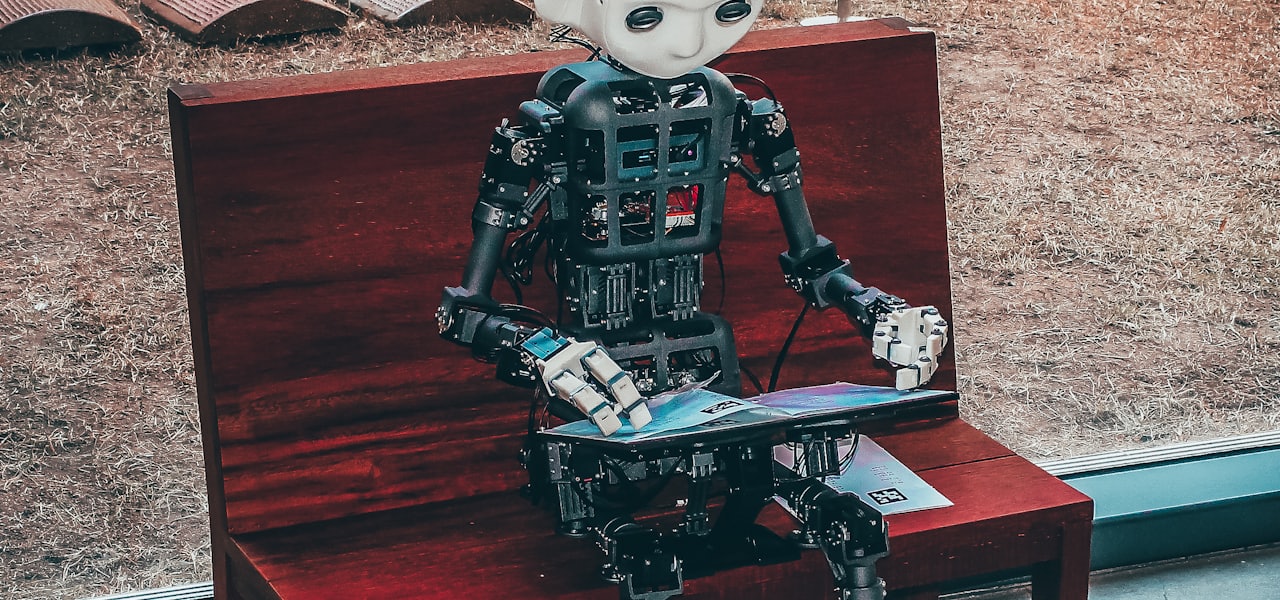
AI@50, formally known as the "Dartmouth Artificial Intelligence Conference: The Next Fifty Years" (July 13–15, 2006), was a conference organized by James H. Moor, commemorating the 50th anniversary of the Dartmouth workshop which effectively inaugurated the history of artificial intelligence. Five of the original ten attendees were present: Marvin Minsky, Ray Solomonoff, Oliver Selfridge, Trenchard More, and John McCarthy. While sponsored by Dartmouth College, General Electric, and the Frederick Whittemore Foundation, a $200,000 grant from the Defense Advanced Research Projects Agency (DARPA) called for a report of the proceedings that would: Analyze progress on AI's original challenges during the first 50 years, and assess whether the challenges were "easier" or "harder" than originally thought and why Document what the AI@50 participants believe are the major research and development challenges facing this field over the next 50 years, and identify what breakthroughs will be needed to meet those challenges Relate those challenges and breakthroughs against developments and trends in other areas such as control theory, signal processing, information theory, statistics, and optimization theory. A summary report by the conference director, James H. Moor, was published in AI Magazine. == Conference Program and links to published papers == James H. Moor, conference Director, Introduction Carol Folt and Barry Scherr, Welcome Carey Heckman, Tonypandy and the Origins of Science === AI: Past, Present, Future === John McCarthy, What Was Expected, What We Did, and AI Today Marvin Minsky, The Emotion Machine === The Future Model of Thinking === Ron Brachman and Hector Levesque, A Large Part of Human Thought David Mumford, What is the Right Model for 'Thought'? Stuart Russell, The Approach of Modern AI === The Future of Network Models === Geoffrey Hinton & Simon Osindero, From Pandemonium to Graphical Models and Back Again Rick Granger, From Brain Circuits to Mind Manufacture === The Future of Learning & Search === Oliver Selfridge, Learning and Education for Software: New Approaches in Machine Learning Ray Solomonoff, Machine Learning — Past and Future Leslie Pack Kaelbling, Learning to be Intelligent Peter Norvig, Web Search as a Product of and Catalyst for AI === The Future of AI === Rod Brooks, Intelligence and Bodies Nils Nilsson, Routes to the Summit Eric Horvitz, In Pursuit of Artificial Intelligence: Reflections on Challenges and Trajectories === The Future of Vision === Eric Grimson, Intelligent Medical Image Analysis: Computer Assisted Surgery and Disease Monitoring Takeo Kanade, Artificial Intelligence Vision: Progress and Non-Progress Terry Sejnowski, A Critique of Pure Vision === The Future of Reasoning === Alan Bundy, Constructing, Selecting and Repairing Representations of Knowledge Edwina Rissland, The Exquisite Centrality of Examples Bart Selman, The Challenge and Promise of Automated Reasoning === The Future of Language and Cognition === Trenchard More The Birth of Array Theory and Nial Eugene Charniak, Why Natural Language Processing is Now Statistical Natural Language Processing Pat Langley, Intelligent Behavior in Humans and Machines === The Future of the Future === Ray Kurzweil, Why We Can Be Confident of Turing Test Capability Within a Quarter Century George Cybenko, The Future Trajectory of AI Charles J. Holland, DARPA's Perspective === AI and Games === Jonathan Schaeffer, Games as a Test-bed for Artificial Intelligence Research Danny Kopec, Chess and AI Shay Bushinsky, Principle Positions in Deep Junior's Development === Future Interactions with Intelligent Machines === Daniela Rus, Making Bodies Smart Sherry Turkle, From Building Intelligences to Nurturing Sensibilities === Selected Submitted Papers: Future Strategies for AI === J. Storrs Hall, Self-improving AI: An Analysis Selmer Bringsjord, The Logicist Manifesto Vincent C. Müller, Is There a Future for AI Without Representation? Kristinn R. Thórisson, Integrated A.I. Systems === Selected Submitted Papers: Future Possibilities for AI === Eric Steinhart, Survival as a Digital Ghost Colin T. A. Schmidt, Did You Leave That 'Contraption' Alone With Your Little Sister? Michael Anderson & Susan Leigh Anderson, The Status of Machine Ethics Marcello Guarini, Computation, Coherence, and Ethical Reasoning
Universal psychometrics
Universal psychometrics encompasses psychometrics instruments that could measure the psychological properties of any intelligent agent. Up until the early 21st century, psychometrics relied heavily on psychological tests that require the subject to cooperate and answer questions, the most famous example being an intelligence test. Such methods are only applicable to the measurement of human psychological properties. As a result, some researchers have proposed the idea of universal psychometrics - they suggest developing testing methods that allow for the measurement of non-human entities' psychological properties. For example, it has been suggested that the Turing test is a form of universal psychometrics. This test involves having testers (without any foreknowledge) attempt to distinguish a human from a machine by interacting with both (while not being to see either individuals). It is supposed that if the machine is equally intelligent to a human, the testers will not be able to distinguish between the two, i.e., their guesses will not be better than chance. Thus, Turing test could measure the intelligence (a psychological variable) of an AI. Other instruments proposed for universal psychometrics include reinforcement learning and measuring the ability to predict complexity.
Microsoft Teams
Microsoft Teams is a team collaboration platform developed by Microsoft as part of the Microsoft 365 suite. It offers features such as workspace chat, video conferencing, file storage, and integration with both Microsoft and third-party applications and services. Teams gradually replaced earlier Microsoft messaging and collaboration platforms, including Skype for Business, Skype, Flip, and Microsoft Classroom. The platform saw significant growth during the COVID-19 pandemic, alongside competitors such as Zoom, Slack, and Google Meet, as organizations shifted to remote work and virtual meetings. As of January 2023, Microsoft reported approximately 280 million monthly active users. == History == On August 29, 2007, Microsoft acquired Parlano, the developer of the persistent group chat tool MindAlign. Years later, on March 4, 2016, Microsoft considered acquiring Slack for $8 billion. However, the proposal was reportedly opposed by Bill Gates, who advocated for focusing on enhancing Skype for Business instead. Lu Qi, then executive vice president of Applications and Services, had led the initiative to pursue the Slack acquisition. Following Lu's departure later that year, Microsoft announced Microsoft Teams on November 2, 2016, at an event in New York City, positioning it as a direct competitor to Slack. Teams launched worldwide on March 14, 2017. The service was initially led by corporate vice president Brian MacDonald. In response to the launch, Slack published a full-page advertisement in The New York Times welcoming the competition and outlining its product philosophy. Although Slack was used by 28 companies in the Fortune 100, The Verge wrote that executives would question paying for the service if Teams provides a similar function in their company's existing Office 365 subscription. However, ZDNET noted that the platforms initially served different markets, as Teams did not support external users, making it less appealing to small businesses and freelancers, a limitation Microsoft later addressed. In response to Teams' announcement, Slack deepened in-product integration with Google services. In May 2017, Microsoft announced that Teams would replace Microsoft Classroom in Office 365 Education. A free version of Teams was released on July 12, 2018, offering most core features at no cost, albeit with limits on users and storage. In January 2019, Microsoft introduced updates targeting "Firstline Workers" to improve Teams’ performance across shared or limited-access devices. In September 2019, Microsoft announced the retirement of Skype for Business in favor of Teams, which took effect on July 31, 2021. In early 2020, Microsoft introduced a push-to-talk "Walkie Talkie" feature aimed at firstline workers using smartphones and tablets over Wi-Fi or cellular networks. The COVID-19 pandemic significantly boosted usage of Teams. On March 19, 2020, Microsoft reported 44 million daily active users. In April, the platform logged 4.1 billion meeting minutes in a single day. A public preview of Microsoft Teams for Linux was released in December 2019, but the Linux client was discontinued in 2022. In July 2020, Microsoft shut down its video game livestreaming platform Mixer, and announced that some of its technologies would be repurposed for use in Teams. On February 28, 2025, Microsoft announced that Skype would be fully retired on May 5, 2025, with users given options to export their data or transition to Microsoft Teams. In October 2025, together with other Microsoft 365 suite apps, Teams had its logo updated. == Usage == == Underlying software == Microsoft Teams, as part of the Microsoft 365 suite, utilizes SharePoint and Exchange Online. Each Team, Shared Channel, and Private Channel has its own Microsoft 365 Group and SharePoint Site used for file storage. Messages are stored in Cosmos DB and are journaled to Exchange Online mailboxes. Private messages, including messages in Private Channels, are journaled to the sender and recipients' mailboxes. Public Channel messages are journaled to their corresponding Team's group mailbox, whereas, messages from Shared Channels are journaled to their own mailboxes. Contacts and voicemail are stored in Exchange Online. Microsoft Teams client is a web-based desktop app, originally developed on top of the Electron framework which combines the Chromium rendering engine and the Node.js JavaScript platform. Version 2.0 client was rebuilt using the Evergreen version of Microsoft Edge WebView2 in place of Electron. == Features == === Chats === Teams allows users to communicate in two-way persistent chats with one or multiple participants. Participants can message using text, emojis, stickers and gifs, as well as sharing links and files. In August 2022, the chat feature was updated for "chat with yourself"; allowing for the organization of files, notes, comments, images, and videos within a private chat tab. === Teams === Teams allows communities, groups, or teams to contribute in a shared workspace where messages and digital content on a specific topic are shared. Team members can join through an invitation sent by a team administrator or owner or sharing of a specific URL. Teams for Education allows admins and teachers to set up groups for classes, professional learning communities (PLCs), staff members, and everyone. === Channels === Channels allow team members to communicate without the use of email or group SMS (texting). Users can reply to posts with text, images, GIFs, and image macros. Direct messages send private messages to designated users rather than the entire channel. Connectors can be used within a channel to submit information contacted through a third-party service. Connectors include Mailchimp, Facebook Pages, Twitter, Power BI and Bing News. === Group conversations === Ad-hoc groups can be created to share instant messaging, audio calls (VoIP), and video calls inside the client software. === Telephone replacement === A feature on one of the higher cost licencing tiers allows connectivity to the public switched telephone network (PSTN) telephone system. This allows users to use Teams as if it were a telephone, making and receiving calls over the PSTN, including the ability to host "conference calls" with multiple participants. === Meeting === Meetings can be scheduled with multiple participants able to share audio, video, chat and presented content with all participants. Multiple users can connect via a meeting link. Automated minutes are possible using the recording and transcript features. Teams has a plugin for Microsoft Outlook to schedule a Teams Meeting in Outlook for a specific date and time and invite others to attend. If a meeting is scheduled within a channel, users visiting the channel are able to see if a meeting is in progress. ==== Teams Live Events ==== Teams Live Events replaces Skype Meeting Broadcast for users to broadcast to 10,000 participants on Teams, Yammer, or Microsoft Stream. ==== Breakout Rooms ==== Breakout rooms split a meeting into small groups. This is often utilized for collaboration during trainings or any environment where having all participants speak at once could be disruptive or unfeasible. Breakout rooms can be set by the hosts to a certain length of time, after which all participants will automatically rejoin the main meeting room. ==== Front Row ==== Front Row adjusts the layout of the viewer's screen, placing the speaker or content in the center of the gallery with other meeting participant's video feeds reduced in size and located below the speaker. === Education === Microsoft Teams for Education allows teachers to distribute, provide feedback, and grade student assignments turned in via Teams using the Assignments tab through Office 365 for Education subscribers. Quizzes can also be assigned to students through an integration with Office Forms. === Protocols === Microsoft Teams is based on a number of Microsoft-specific protocols. Video conferences are realized over the protocol MNP24, known from the Skype consumer version. VoIP and video conference clients based on SIP and H.323 need special gateways to connect to Microsoft Teams servers. With the help of Interactive Connectivity Establishment (ICE), clients behind Network address translation routers and restrictive firewalls are also able to connect, if peer-to-peer is not possible. === Integrations === Microsoft Teams has integrations through Microsoft AppSource, its integration marketplace. In 2020, Microsoft partnered with KUDO, a cloud-based solution with language interpretation, to allow integrated language meeting controls. In June 2022, an update was released using AI to improve call audio through the elimination of background feedback loops and cancelling non-vocal audio. == Anti-trust controversy == In July 2023, the European Commission opened an anti-trust investigation into the possibility that Microsoft unfairly used its office suite market power to increase sales of Teams and hurt
Graph cuts in computer vision and artificial intelligence
As applied in the field of computer vision, graph cut optimization can be employed to efficiently solve a wide variety of low-level computer vision problems (early vision), such as image smoothing, the stereo correspondence problem, image segmentation, object co-segmentation, numerous military applications (eg Automatic target recognition) and many other problems that can be formulated in terms of energy minimization (eg Climate Science and Environmental modelling). Graph cut techniques are now increasingly being used in combination with more general spatial Artificial intelligence techniques (eg to enforce structure in Large language model output to sharpen tumour boundaries and similarly for various Augmented reality, Self-driving car, Robotics, Google Maps applications etc). Many of these energy minimization problems can be approximated by solving a maximum flow problem in a graph (and thus, by the max-flow min-cut theorem, define a minimal cut of the graph). Under most formulations of such problems in computer vision, the minimum energy solution corresponds to the maximum a posteriori estimate of a solution. Although many computer vision algorithms involve cutting a graph (e.g. normalized cuts), the term "graph cuts" is applied specifically to those models which employ a max-flow/min-cut optimization (other graph cutting algorithms may be considered as graph partitioning algorithms). "Binary" problems (such as denoising a binary image) can be solved exactly using this approach; problems where pixels can be labeled with more than two different labels (such as stereo correspondence, or denoising of a grayscale image) cannot be solved exactly, but solutions produced are usually near the global optimum. == History == The foundational theory of graph cuts in computer vision was first developed by Margaret Greig, Bruce Porteous and Allan Seheult (GPS) of Durham University in a now legendary discussion contribution to Julian Besag's 1986 paper and a more detailed follow on paper in 1989. In the Bayesian statistical context of smoothing noisy images, using a Markov random field as the image prior distribution, they showed with a mathematically beautiful proof how the maximum a posteriori estimate of a binary image can be obtained exactly by maximizing the flow through an associated image network, or graph, involving the introduction of a source and sink and Log-likelihood ratios. The problem was shown to be efficiently solvable exactly, an unexpected result as the problem was believed to be computationally intractable (NP hard). GPS also addressed the computational cost of the max-flow algorithm on large graphs, a significant concern at the time. They proposed a partitioning algorithm (see Section 4 of GPS) involving the recursive amalgamation of non-overlapping blocks, or tiles, which gave a 12X increase in speed. This approach recursively solved and amalgamated independent sub-graphs until the whole graph was solved. While contemporaries like Geman and Geman had advocated Parallel computing in the context of Simulated annealing, the GPS blocking strategy offered a deterministic structure amenable to parallelisation and anticipated modern artificial intelligence design across multiple GPUs. However, until recently, this aspect of the paper was largely ignored and subsequent research focused on Serial computer global search trees, such as the Boykov-Kolmogorov algorithm. Although the general k {\displaystyle k} -colour problem is NP hard for k > 2 , {\displaystyle k>2,} the GPS approach has turned out to have very wide applicability in general computer vision problems. This was first demonstrated by Boykov, Veksler and Zabih who, in a seminal paper published more than 10 years after the original GPS paper, and in other important works, lit the blue touch paper for the general adoption of graph cut techniques in computer vision. They showed that, for general problems, the GPS approach can be applied iteratively to sequences of binary problems, using their now ubiquitous alpha-expansion algorithm, yielding near optimal solutions. Prior to these results, approximate local optimisation techniques such as simulated annealing (as proposed by the Geman brothers) or iterated conditional modes (a type of greedy algorithm suggested by Julian Besag) were used to solve such image smoothing problems. Building on these advancements, GPS graph cut optimization was subsequently adapted for interactive image segmentation, most notably through the "GrabCut" algorithm introduced by Carsten Rother, Vladimir Kolmogorov, and Andrew Blake of Microsoft Research, Cambridge. GrabCut extended earlier interactive graph cut methods by replacing monochrome image histograms with Gaussian mixture models to estimate colour distributions, and by employing an iterative GPS energy minimisation scheme. This approach significantly simplified user interaction, requiring only a rough bounding box around the target object rather than detailed user-drawn strokes, and it quickly became a standard tool in both academic research and commercial image editing software. The GPS paper connected and bridged profound ideas from Mathematical statistics (Bayes' theorem, Markov random field), Physics (Ising model), Optimisation (Energy function) and Computer science (Network flow problem) and led the move away from approximate local and slow optimisation approaches (eg simulated annealing) to more powerful exact, or near exact, faster global optimisation techniques. It is now recognised as seminal as it was well ahead of its time and, in particular, was published years before the computing power revolution of Moore's law and GPUs. Significantly, GPS was published in a mathematical statistics (rather than a computer vision) journal, and this led to it being overlooked by the computer vision community for many years. It is unofficially known as "The Velvet Underground" paper of computer vision (ie although very few computer vision people read the paper [bought the record], those that did, most importantly Boykov, Veksler and Zabih, started new and important research [formed a band]). This is confirmed by GPS' very large amplification ratio (2nd order citations/first order citations), estimated at well in excess of 100. Despite the foundational nature of the GPS work, formal recognition from the computer vision community has predominantly gone to the researchers who followed to extend and popularise the graph cut method. For example, Boykov, Veksler and Zabih deservedly received a Helmholtz Prize from the ICCV in 2011. This prize recognises ICCV papers from 10 or more years earlier that have had a significant impact on computer vision research. In 2011, Couprie et al. proposed a general image segmentation framework, called the "Power Watershed", that minimized a real-valued indicator function from [0,1] over a graph, constrained by user seeds (or unary terms) set to 0 or 1, in which the minimization of the indicator function over the graph is optimized with respect to an exponent p {\displaystyle p} . When p = 1 {\displaystyle p=1} , the Power Watershed is optimized by graph cuts, when p = 0 {\displaystyle p=0} the Power Watershed is optimized by shortest paths, p = 2 {\displaystyle p=2} is optimized by the random walker algorithm and p = ∞ {\displaystyle p=\infty } is optimized by the watershed algorithm. In this way, the Power Watershed may be viewed as a generalization of graph cuts that provides a straightforward connection with other energy optimization segmentation/clustering algorithms. == Binary segmentation of images == === Notation === Image: x ∈ { R , G , B } N {\displaystyle x\in \{R,G,B\}^{N}} Output: Segmentation (also called opacity) S ∈ R N {\displaystyle S\in R^{N}} (soft segmentation). For hard segmentation S ∈ { 0 for background , 1 for foreground/object to be detected } N {\displaystyle S\in \{0{\text{ for background}},1{\text{ for foreground/object to be detected}}\}^{N}} Energy function: E ( x , S , C , λ ) {\displaystyle E(x,S,C,\lambda )} where C is the color parameter and λ is the coherence parameter. E ( x , S , C , λ ) = E c o l o r + E c o h e r e n c e {\displaystyle E(x,S,C,\lambda )=E_{\rm {color}}+E_{\rm {coherence}}} Optimization: The segmentation can be estimated as a global minimum over S: arg min S E ( x , S , C , λ ) {\displaystyle {\arg \min }_{S}E(x,S,C,\lambda )} === Existing methods === Standard Graph cuts: optimize energy function over the segmentation (unknown S value). Iterated Graph cuts: First step optimizes over the color parameters using K-means. Second step performs the usual graph cuts algorithm. These 2 steps are repeated recursively until convergence Dynamic graph cuts:Allows to re-run the algorithm much faster after modifying the problem (e.g. after new seeds have been added by a user). === Energy function === Pr ( x ∣ S ) = K − E {\displaystyle \Pr(x\mid S)=K^{-E}} where the energy E {\displaystyle E} is composed of two different mod
Automated essay scoring
Automated essay scoring (AES) is the use of specialized computer programs to assign grades to essays written in an educational setting. It is a form of educational assessment and an application of natural language processing. Its objective is to classify a large set of textual entities into a small number of discrete categories, corresponding to the possible grades, for example, the numbers 1 to 6. Therefore, it can be considered a problem of statistical classification. Several factors have contributed to a growing interest in AES. Among them are cost, accountability, standards, and technology. Rising education costs have led to pressure to hold the educational system accountable for results by imposing standards. The advance of information technology promises to measure educational achievement at reduced cost. The use of AES for high-stakes testing in education has generated significant backlash, with opponents pointing to research that computers cannot yet grade writing accurately and arguing that their use for such purposes promotes teaching writing in reductive ways (i.e. teaching to the test). == History == Most historical summaries of AES trace the origins of the field to the work of Ellis Batten Page. In 1966, he argued for the possibility of scoring essays by computer, and in 1968 he published his successful work with a program called Project Essay Grade (PEG). Using the technology of that time, computerized essay scoring would not have been cost-effective, so Page abated his efforts for about two decades. Eventually, Page sold PEG to Measurement Incorporated. By 1990, desktop computers had become so powerful and so widespread that AES was a practical possibility. As early as 1982, a UNIX program called Writer's Workbench was able to offer punctuation, spelling and grammar advice. In collaboration with several companies (notably Educational Testing Service), Page updated PEG and ran some successful trials in the early 1990s. Peter Foltz and Thomas Landauer developed a system using a scoring engine called the Intelligent Essay Assessor (IEA). IEA was first used to score essays in 1997 for their undergraduate courses. It is now a product from Pearson Educational Technologies and used for scoring within a number of commercial products and state and national exams. IntelliMetric is Vantage Learning's AES engine. Its development began in 1996. It was first used commercially to score essays in 1998. Educational Testing Service offers "e-rater", an automated essay scoring program. It was first used commercially in February 1999. Jill Burstein was the team leader in its development. ETS's Criterion Online Writing Evaluation Service uses the e-rater engine to provide both scores and targeted feedback. Lawrence Rudner has done some work with Bayesian scoring, and developed a system called BETSY (Bayesian Essay Test Scoring sYstem). Some of his results have been published in print or online, but no commercial system incorporates BETSY as yet. Under the leadership of Howard Mitzel and Sue Lottridge, Pacific Metrics developed a constructed response automated scoring engine, CRASE. Currently utilized by several state departments of education and in a U.S. Department of Education-funded Enhanced Assessment Grant, Pacific Metrics’ technology has been used in large-scale formative and summative assessment environments since 2007. Measurement Inc. acquired the rights to PEG in 2002 and has continued to develop it. In 2012, the Hewlett Foundation sponsored a competition on Kaggle called the Automated Student Assessment Prize (ASAP). 201 challenge participants attempted to predict, using AES, the scores that human raters would give to thousands of essays written to eight different prompts. The intent was to demonstrate that AES can be as reliable as human raters, or more so. The competition also hosted a separate demonstration among nine AES vendors on a subset of the ASAP data. Although the investigators reported that the automated essay scoring was as reliable as human scoring, this claim was not substantiated by any statistical tests because some of the vendors required that no such tests be performed as a precondition for their participation. Moreover, the claim that the Hewlett Study demonstrated that AES can be as reliable as human raters has since been strongly contested, including by Randy E. Bennett, the Norman O. Frederiksen Chair in Assessment Innovation at the Educational Testing Service. Some of the major criticisms of the study have been that five of the eight datasets consisted of paragraphs rather than essays, four of the eight data sets were graded by human readers for content only rather than for writing ability, and that rather than measuring human readers and the AES machines against the "true score", the average of the two readers' scores, the study employed an artificial construct, the "resolved score", which in four datasets consisted of the higher of the two human scores if there was a disagreement. This last practice, in particular, gave the machines an unfair advantage by allowing them to round up for these datasets. In 1966, Page hypothesized that, in the future, the computer-based judge will be better correlated with each human judge than the other human judges are. Despite criticizing the applicability of this approach to essay marking in general, this hypothesis was supported for marking free text answers to short questions, such as those typical of the British GCSE system. Results of supervised learning demonstrate that the automatic systems perform well when marking by different human teachers is in good agreement. Unsupervised clustering of answers showed that excellent papers and weak papers formed well-defined clusters, and the automated marking rule for these clusters worked well, whereas marks given by human teachers for the third cluster ('mixed') can be controversial, and the reliability of any assessment of works from the 'mixed' cluster can often be questioned (both human and computer-based). == Different dimensions of essay quality == According to a recent survey, modern AES systems try to score different dimensions of an essay's quality in order to provide feedback to users. These dimensions include the following items: Grammaticality: following grammar rules Usage: using of prepositions, word usage Mechanics: following rules for spelling, punctuation, capitalization Style: word choice, sentence structure variety Relevance: how relevant of the content to the prompt Organization: how well the essay is structured Development: development of ideas with examples Cohesion: appropriate use of transition phrases Coherence: appropriate transitions between ideas Thesis Clarity: clarity of the thesis Persuasiveness: convincingness of the major argument == Procedure == From the beginning, the basic procedure for AES has been to start with a training set of essays that have been carefully hand-scored. The program evaluates surface features of the text of each essay, such as the total number of words, the number of subordinate clauses, or the ratio of uppercase to lowercase letters—quantities that can be measured without any human insight. It then constructs a mathematical model that relates these quantities to the scores that the essays received. The same model is then applied to calculate scores of new essays. Recently, one such mathematical model was created by Isaac Persing and Vincent Ng. which not only evaluates essays on the above features, but also on their argument strength. It evaluates various features of the essay, such as the agreement level of the author and reasons for the same, adherence to the prompt's topic, locations of argument components (major claim, claim, premise), errors in the arguments, cohesion in the arguments among various other features. In contrast to the other models mentioned above, this model is closer in duplicating human insight while grading essays. Due to the growing popularity of deep neural networks, deep learning approaches have been adopted for automated essay scoring, generally obtaining superior results, often surpassing inter-human agreement levels. The various AES programs differ in what specific surface features they measure, how many essays are required in the training set, and most significantly in the mathematical modeling technique. Early attempts used linear regression. Modern systems may use linear regression or other machine learning techniques often in combination with other statistical techniques such as latent semantic analysis and Bayesian inference. The automated essay scoring task has also been studied in the cross-domain setting using machine learning models, where the models are trained on essays written for one prompt (topic) and tested on essays written for another prompt. Successful approaches in the cross-domain scenario are based on deep neural networks or models that combine deep and shallow features. == Criteria for success == Any method of a
Unspent transaction output
In cryptocurrencies, an unspent transaction output (UTXO, often capitalized as UTxO) is a distinctive element in a subset of digital currency models. A UTXO represents a certain amount of cryptocurrency that has been authorized by a sender and is available to be spent by a recipient. The utilization of UTXOs in transaction processes is a key feature of many cryptocurrencies, but it primarily characterizes those implementing the UTXO model. UTXOs employ public key cryptography to ascertain and transfer ownership. More specifically, the recipient's public key is formatted into the UTXO, thereby limiting the capability to spend the UTXO to the account that can demonstrate ownership of the corresponding private key. A valid digital signature associated with the public key must be included for the UTXO to be spent. In the UTXO model, each unit of currency is treated as a discrete object. The history of a UTXO is documented only within the blocks where it is transferred. To ascertain the total balance of an account, one must scan each block to find the latest UTXOs linked to that account. While all nodes within a blockchain network must consent to the block history, the blocks relevant to an account's balance are unique to that account. UTXOs constitute a chain of ownership depicted as a series of digital signatures dating back to the coin's inception, regardless of whether the coin was minted via mining, staking, or another procedure determined by the cryptocurrency protocol. The UTXO model was invented for Bitcoin. Cardano uses an extended version of the UTXO model known as EUTXO. == Origins == The conceptual framework of the UTXO model can be traced back to Hal Finney's Reusable Proofs of Work proposal, which itself was based on Adam Back's 1997 Hashcash proposal. Bitcoin, released in 2009, was the first widespread implementation of the UTXO model in practice. == UTXO model vs. account Model == Cryptocurrencies that utilize the UTXO model function differently compared to those using the account model. In the UTXO model, individual units of cryptocurrency, termed as unspent transaction outputs (UTXOs), are transferred between users, analogous to the exchange of physical cash. This model impacts how transactions and ownership are recorded and verified within the blockchain network. The account model preserves a record of each account and its corresponding balance for every block added to the network. This setup enables quicker balance verification without the need to scan historical blocks, but it increases the raw size of each block (though data compression techniques can be utilized to alleviate this). However, both models necessitate the inspection of past blocks to fully authenticate the origin of coins. In the UTXO model, each object is immutable - units of coins cannot be 'edited' in the same way an account balance is modified when a transaction occurs. Rather, the balance is computed from the transaction history dating back to when the coins were first minted. This simplicity enhances security, as a UTXO either exists in its anticipated form or it does not. In contrast, the account model requires meticulous verification of the account's status during transactions, which can lead to oversights if not conducted correctly. In valid blockchain transactions, only unspent outputs (UTXOs) are permissible for funding subsequent transactions. This requirement is critical to prevent double-spending and fraud. Accordingly, inputs in a transaction are removed from the UTXO set, while outputs create new UTXOs that are added to the set. The holders of private keys, such as those with cryptocurrency wallets, can utilize these UTXOs for future transactions.
Geometric hashing
In computer science, geometric hashing is a method for efficiently finding two-dimensional objects represented by discrete points that have undergone an affine transformation, though extensions exist to other object representations and transformations. In an off-line step, the objects are encoded by treating each pair of points as a geometric basis. The remaining points can be represented in an invariant fashion with respect to this basis using two parameters. For each point, its quantized transformed coordinates are stored in the hash table as a key, and indices of the basis points as a value. Then a new pair of basis points is selected, and the process is repeated. In the on-line (recognition) step, randomly selected pairs of data points are considered as candidate bases. For each candidate basis, the remaining data points are encoded according to the basis and possible correspondences from the object are found in the previously constructed table. The candidate basis is accepted if a sufficiently large number of the data points index a consistent object basis. Geometric hashing was originally suggested in computer vision for object recognition in 2D and 3D, but later was applied to different problems such as structural alignment of proteins. == Geometric hashing in computer vision == Geometric hashing is a method used for object recognition. Let’s say that we want to check if a model image can be seen in an input image. This can be accomplished with geometric hashing. The method could be used to recognize one of the multiple objects in a base, in this case the hash table should store not only the pose information but also the index of object model in the base. === Example === For simplicity, this example will not use too many point features and assume that their descriptors are given by their coordinates only (in practice local descriptors such as SIFT could be used for indexing). ==== Training Phase ==== Find the model's feature points. Assume that 5 feature points are found in the model image with the coordinates ( 12 , 17 ) ; {\displaystyle (12,17);} ( 45 , 13 ) ; {\displaystyle (45,13);} ( 40 , 46 ) ; {\displaystyle (40,46);} ( 20 , 35 ) ; {\displaystyle (20,35);} ( 35 , 25 ) {\displaystyle (35,25)} , see the picture. Introduce a basis to describe the locations of the feature points. For 2D space and similarity transformation the basis is defined by a pair of points. The point of origin is placed in the middle of the segment connecting the two points (P2, P4 in our example), the x ′ {\displaystyle x'} axis is directed towards one of them, the y ′ {\displaystyle y'} is orthogonal and goes through the origin. The scale is selected such that absolute value of x ′ {\displaystyle x'} for both basis points is 1. Describe feature locations with respect to that basis, i.e. compute the projections to the new coordinate axes. The coordinates should be discretised to make recognition robust to noise, we take the bin size 0.25. We thus get the coordinates ( − 0.75 , − 1.25 ) ; {\displaystyle (-0.75,-1.25);} ( 1.00 , 0.00 ) ; {\displaystyle (1.00,0.00);} ( − 0.50 , 1.25 ) ; {\displaystyle (-0.50,1.25);} ( − 1.00 , 0.00 ) ; {\displaystyle (-1.00,0.00);} ( 0.00 , 0.25 ) {\displaystyle (0.00,0.25)} Store the basis in a hash table indexed by the features (only transformed coordinates in this case). If there were more objects to match with, we should also store the object number along with the basis pair. Repeat the process for a different basis pair (Step 2). It is needed to handle occlusions. Ideally, all the non-colinear pairs should be enumerated. We provide the hash table after two iterations, the pair (P1, P3) is selected for the second one. Hash Table: Most hash tables cannot have identical keys mapped to different values. So in real life one won’t encode basis keys (1.0, 0.0) and (-1.0, 0.0) in a hash table. ==== Recognition Phase ==== Find interesting feature points in the input image. Choose an arbitrary basis. If there isn't a suitable arbitrary basis, then it is likely that the input image does not contain the target object. Describe coordinates of the feature points in the new basis. Quantize obtained coordinates as it was done before. Compare all the transformed point features in the input image with the hash table. If the point features are identical or similar, then increase the count for the corresponding basis (and the type of object, if any). For each basis such that the count exceeds a certain threshold, verify the hypothesis that it corresponds to an image basis chosen in Step 2. Transfer the image coordinate system to the model one (for the supposed object) and try to match them. If successful, the object is found. Otherwise, go back to Step 2. === Finding mirrored pattern === It seems that this method is only capable of handling scaling, translation, and rotation. However, the input image may contain the object in mirror transform. Therefore, geometric hashing should be able to find the object, too. There are two ways to detect mirrored objects. For the vector graph, make the left side positive, and the right side negative. Multiplying the x position by -1 will give the same result. Use 3 points for the basis. This allows detecting mirror images (or objects). Actually, using 3 points for the basis is another approach for geometric hashing. === Geometric hashing in higher-dimensions === Similar to the example above, hashing applies to higher-dimensional data. For three-dimensional data points, three points are also needed for the basis. The first two points define the x-axis, and the third point defines the y-axis (with the first point). The z-axis is perpendicular to the created axis using the right-hand rule. Notice that the order of the points affects the resulting basis